
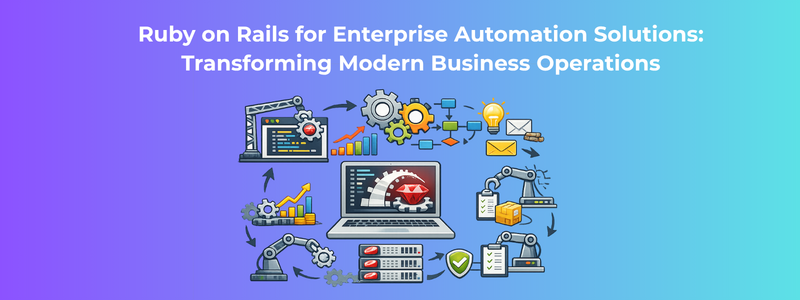
I takt med att företagen fortsätter att anamma den digitala omvandlingen har automatisering blivit en strategisk nödvändighet snarare än en konkurrensfördel. Dagens organisationer hanterar tusentals repetitiva uppgifter inom olika avdelningar – från ekonomi och personal till kundsupport, leveranskedja och försäljning. Manuella processer leder ofta till förseningar, fel, ökade driftskostnader och minskad produktivitet. Företagsautomatisering hanterar dessa utmaningar genom att effektivisera arbetsflöden, integrera affärssystem och göra det möjligt för organisationer att driva sin verksamhet mer effektivt.
Att bygga automatiseringslösningar i företagsklass kräver dock mer än bara automatiseringsverktyg. Företag behöver ett robust, skalbart, säkert och flexibelt utvecklingsramverk som klarar av komplexa arbetsflöden, kan integreras med flera företagssystem och stödjer framtida tillväxt. Det är här Ruby on Rails (RoR) sticker ut.
Ruby on Rails har gjort sig ett namn som ett av de mest produktiva ramverken för webbapplikationer som finns. Även om det ofta förknippas med nystartade företag och snabb applikationsutveckling, är det lika väl lämpat för att driva automatiseringsplattformar på företagsnivå. Dess konventionsstyrda arkitektur, välutvecklade ekosystem, omfattande bibliotek och utmärkt stöd för integrationer gör det till ett idealiskt val för utveckling av avancerade automatiseringslösningar för företag.
I den här guiden ska vi undersöka hur Ruby on Rails underlättar automatisering i företag, vilka fördelar det erbjuder, praktiska tillämpningar, implementeringsstrategier och varför företag fortsätter att välja Rails för affärskritiska automatiseringsprojekt.
Att förstå automatisering i företagsmiljöer
Med företagsautomatisering avses användningen av programvara och teknik för att automatisera affärsprocesser inom en organisation. I stället för att förlita sig på manuella ingrepp gör företagsautomatiseringen det möjligt för systemen att utföra repetitiva uppgifter utifrån fördefinierade affärsregler och arbetsflöden.
Automatisering inom företagsverksamhet omfattar vanligtvis följande:
- Automatisering av arbetsflöden
- Automatisering av affärsprocesser (BPA)
- Robotiserad processautomatisering (RPA)
- Dokumenthantering
- Automatisering av kundrelationer
- Automatisering av HR-processer
- Automatisering av finansiella processer
- Automatisering av IT-driften
- Godkännandehantering
- Datasyneronisering
Det främsta målet är att förbättra den operativa effektiviteten och samtidigt minska antalet mänskliga fel och driftskostnaderna.
Varför automatisering inom företagen är viktigt
Dagens företag står inför en alltmer komplex verksamhet. Avdelningarna arbetar ofta med olika programvarusystem, vilket leder till osammanhängande processer och informationssilos.
Vanliga utmaningar inkluderar:
- Manuella godkännanden
- Dubbel datainmatning
- Försenad rapportering
- Försenade svar från kunderna
- Frågor rörande efterlevnad
- Ineffektiv resursanvändning
- Höga driftskostnader
- Begränsad insyn i affärsprocesserna
Företagsautomatisering hjälper organisationer att övervinna dessa hinder genom att skapa sammankopplade, intelligenta och automatiserade arbetsflöden.
Fördelarna är bland annat:
- Snabbare beslutsfattande
- Ökad produktivitet hos de anställda
- Minskade driftskostnader
- Bättre kundupplevelser
- Förbättrad efterlevnad
- Ökad insyn i processerna
- Bättre skalbarhet
Tack vare automatiseringen kan medarbetarna ägna sig åt strategiska initiativ istället för repetitiva administrativa uppgifter.
Varför Ruby on Rails för automatisering inom företagssektorn?
Ruby on Rails erbjuder många fördelar som gör det särskilt väl lämpat för automatiseringsprojekt inom företagssektorn.
Snabb utveckling
En av Rails största styrkor är dess förmåga att avsevärt minska utvecklingstiden.
Dess filosofi “Convention over Configuration” minimerar repetitiv kodning samtidigt som den förser utvecklare med standardiserade projektstrukturer.
Detta innebär att företagen kan:
- Sätt igång automatiseringsplattformar snabbare
- Minska utvecklingskostnaderna
- Leverera uppdateringar oftare
- Påskynda satsningarna på digital omställning
Snabb utveckling är särskilt värdefull inom konkurrensutsatta branscher där snabb lansering på marknaden är avgörande.
Skalbar arkitektur
Företagsapplikationer utvecklas ofta i snabb takt.
Ett arbetsflöde som inledningsvis stödjer en avdelning kan så småningom komma att utvidgas till att omfatta flera affärsenheter.
Rails stöder skalbara arkitekturer genom:
- Modulär applikationsdesign
- Kompatibilitet med mikrotjänster
- RESTful API:er
- Bearbetning av bakgrundsjobb
- Molnbaserad driftsättning
- Horisontell skalning
Denna flexibilitet gör det möjligt för företag att växa utan att behöva bygga om sina system.
Ren och underhållsvänlig kod
I stora företagsapplikationer ingår flera utvecklingsteam.
Ruby on Rails rekommenderar:
- En välorganiserad projektstruktur
- Återanvändbara komponenter
- Tydlig åtskillnad mellan olika ansvarsområden
- Standardrutiner för kodning
Detta gör det enklare att underhålla företagsapplikationer under många år.
Ett omfattande biblioteksekosystem
Rails erbjuder tusentals välutvecklade gem som påskyndar utvecklingen.
Bland de populära gem-filerna inom automatisering finns bland annat:
- Sidekiq
- Aktiv tjänst
- Tänka ut
- Expert
- AASM
- Pappersspår
- Närhelst
- Plundra
- Kaminari
I stället för att uppfinna vanliga funktioner på nytt utnyttjar utvecklare beprövade bibliotek för att snabbare kunna bygga tillförlitliga företagslösningar.
Kraftfulla API-funktioner
Moderna företag förlitar sig sällan på en enda mjukvaruplattform.
Automatiseringslösningar kopplar ofta samman:
- ERP-system
- CRM-programvara
- Bokföringsprogram
- HR-plattformar
- Betalningsgränssnitt
- Marknadsföringsverktyg
- Analysplattformar
- Molnbaserade lagringstjänster
Ruby on Rails är särskilt lämpligt för att bygga säkra RESTful-API:er och använda API:er från tredje part, vilket gör integrationen smidig.
Viktiga automatiseringslösningar för företag, utvecklade med Ruby on Rails
Rails stöder automatisering inom praktiskt taget alla avdelningar i en organisation.
HR-automatisering
Personalavdelningarna hanterar ett stort antal repetitiva arbetsuppgifter.
Automatiseringen omfattar:
- Introduktion av nyanställda
- Ledighetshantering
- Närvaroregistrering
- Arbetsflöden för löneadministration
- Prestationsbedömningar
- Dokumentkontroll
- Avgångshantering
Automatiserade HR-system förbättrar medarbetarnas upplevelser samtidigt som de minskar den administrativa arbetsbördan.
Automatisering inom finans
Ekonomiavdelningarna hanterar tusentals transaktioner varje månad.
Rails-baserad automatisering kan hantera:
- Fakturering
- Godkännande av utgifter
- Budgetuppföljning
- Betalningar till leverantörer
- Finansiell rapportering
- Skattedokumentation
- Förberedelser inför revisionen
Automatisering förbättrar den finansiella noggrannheten och påskyndar samtidigt godkännandeprocesserna.
Kundrelationshantering (CRM)
Försäljnings- och kundtjänstteamen har stor nytta av automatiseringen.
Exempel på detta är:
- Huvuduppdrag
- Kundregistrering
- Automatiserade uppföljningar
- Uppföljning av försäljningspipeline
- Vidarebefordran av supportärenden
- Kundsegmentering
- Påminnelser om förnyelse
Automatisering säkerställer att kundkontakterna sker i rätt tid och leder till förbättrade konverteringsgrader.
Automatisering av leveranskedjan
Företag inom tillverknings- och logistikbranschen automatiserar:
- Lagerövervakning
- Inköpsorder
- Kommunikation med leverantörer
- Spårning av försändelser
- Lagerhantering
- Efterfrågeprognoser
Rails integreras smidigt med ERP-system för att skapa smarta arbetsflöden i leveranskedjan.
Automatisering av IT-driften
Interna IT-avdelningar automatiserar:
- Användarregistrering
- Begäran om tillgång
- Återställning av lösenord
- Händelsehantering
- Spårning av tillgångar
- Programvaruinstallation
Automatisering minskar antalet manuella supportärenden och förbättrar den operativa effektiviteten.
Efterlevnad och styrning
Branscher med stränga regler kräver omfattande övervakning av efterlevnaden.
Rails-applikationer automatiserar:
- Genomförande av riktlinjer
- Revisionsspår
- Godkännande av dokument
- Regulatorisk rapportering
- Riskbedömningar
- Säkerhetsövervakning
En omfattande loggning säkerställer ansvarsskyldighet inom hela företagets verksamhet.
Viktiga funktioner i automatiseringslösningar för företag
Framgångsrika automatiseringsplattformar för företag innehåller vanligtvis flera viktiga funktioner.
Arbetsflödesmotor
Affärsprocesser består av flera steg.
En arbetsflödesmotor hanterar:
- Uppgiftsfördelning
- Godkännanden
- Villkorlig förgrening
- Eskaleringar
- Meddelanden
- Uppföljning av slutförande
Med Rails kan utvecklare bygga arbetsflödesmotorer som går att anpassa i hög grad.
Bearbetning av bakgrund
Många automatiseringsuppgifter kräver avsevärd bearbetningstid.
Exempel på detta är:
- Rapportgenerering
- Import av stora datamängder
- E-postkampanjer
- Filkonverteringar
- API-synkronisering
Med hjälp av verktyg som Sidekiq och Active Job hanterar Rails dessa uppgifter asynkront utan att det påverkar applikationens prestanda.
Rollbaserad åtkomstkontroll
Företagssystem betjänar olika användare med olika behörigheter.
Typiska roller är bland annat:
- Anställda
- Chefer
- Avdelningschefer
- HR-chefer
- Ekonomiteam
- Systemadministratörer
Rails erbjuder robusta ramverk för autentisering och auktorisering för att hantera användarnas åtkomst på ett säkert sätt.
Meddelandesystem
Automatisering är i hög grad beroende av snabb kommunikation.
Rails stöder:
- E-postaviseringar
- SMS-aviseringar
- Push-meddelanden
- Slack-integrationer
- Meddelandehantering i Microsoft Teams
Meddelanden håller berörda parter informerade under varje steg i arbetsflödet.
Rapporteringspanel
Företagsledare behöver ha insyn i verksamheten i realtid.
Automatiseringspaneler erbjuder:
- Processstatus
- Väntar på godkännanden
- Prestationsmått
- Andel slutförda arbetsflöden
- Operativa nyckeltal
- Systemaktivitet
Dessa insikter bidrar till välgrundade beslut.
Integrering av företagssystem
En av Rails främsta styrkor är integrationen med företagssystem.
Vanliga integrationer är bland annat:
Enterprise Resource Planning (ERP)
- SAP
- Oracle ERP
- Microsoft Dynamics
Kundrelationshantering (CRM)
- Salesforce
- HubSpot
- Zoho CRM
HR-plattformar
- BambooHR
- Arbetsdag
- SAP SuccessFactors
Bokföringsprogram
- QuickBooks
- Xero
- NetSuite
Kommunikationsverktyg
- Slack
- Microsoft Teams
- Twilio
Molntjänster
- AWS
- Azure
- Google Cloud Platform
Dessa integrationer skapar sammanlänkade ekosystem där informationen flödar automatiskt mellan avdelningarna.
Säkerhet inom företagsautomatisering
Säkerhet är en högsta prioritet för företagsapplikationer.
Ruby on Rails erbjuder inbyggt skydd mot:
- SQL-injektion
- Cross-Site Request Forgery (CSRF)
- Cross-Site Scripting (XSS)
- Sessionkapning
- Manipulering av parametrar
Ytterligare säkerhetsåtgärder för företag omfattar:
- Flerfaktorautentisering
- OAuth-autentisering
- Enkel inloggning (SSO)
- Datakryptering
- Säker API-autentisering
- Rollbaserade behörigheter
- Revisionsloggning
Tillsammans bidrar dessa funktioner till att organisationer kan skydda känslig affärsinformation.
Prestandaoptimering för företagsapplikationer
Automatiseringsplattformar för företag hanterar ofta tusentals – eller till och med miljoner – transaktioner varje dag.
Rails-applikationer upprätthåller hög prestanda genom:
- Databasindexering
- Optimering av frågor
- Bakgrundsbehandling
- Cachelagringsstrategier
- Innehållsleveransnätverk (CDN)
- Horisontell skalning
- Lastbalansering
- Köhantering
En korrekt optimering garanterar stabil prestanda även vid hög belastning.
Bästa praxis för att utveckla automatiseringslösningar för företag
För att maximera den långsiktiga framgången bör organisationer följa beprövade utvecklingsmetoder.
Förstå befintliga affärsprocesser
Innan du börjar skriva kod:
- Dokumentflöden
- Identifiera flaskhalsar
- Fastställ mål för automatiseringen
- Samla in synpunkter från berörda parter
En tydlig förståelse av affärskraven minskar risken för kostsamma ändringar i ett senare skede.
Bygga modulära applikationer
Stora företagssystem bör delas upp i återanvändbara moduler.
Exempel på detta är:
- Autentisering
- Arbetsflödeshantering
- Meddelanden
- Rapportering
- API-integrationer
En modulär arkitektur förbättrar skalbarheten och förenklar underhållet.
Prioritera användarupplevelsen
Automatiseringsplattformar bör vara intuitiva.
Tänk på följande:
- Överskådliga instrumentpaneler
- Enkel navigering
- Mobilanpassning
- Snabba laddningstider
- Rensa arbetsflödesstatusar
Användarvänliga applikationer främjar införandet inom olika avdelningar.
Testa noggrant
Automatiseringssystem kräver omfattande tester.
Rails stöder:
- Enhetstestning
- Integrationstestning
- Systemtestning
- API-testning
- Prestandatestning
Omfattande testning minimerar produktionsproblem och säkerställer en tillförlitlig automatisering.
Övervaka och förbättra
Automatiseringen inom företagen bör utvecklas kontinuerligt.
Spåra nyckeltal som till exempel:
- Tider för slutförande av arbetsflöden
- Misslyckade processer
- Användarnas acceptans
- Köprestanda
- Systemets drifttid
Genom regelbunden optimering kan automatiseringen anpassas efter förändrade affärsbehov.
Framtiden för företagsautomatisering med Ruby on Rails
Automatiseringen inom företagsvärlden utvecklas snabbt tack vare nya tekniker.
Moderna automatiseringsplattformar innehåller i allt högre grad följande:
- Artificiell intelligens
- Maskininlärning
- Prediktiv analys
- Intelligent dokumenthantering
- Behandling av naturliga språk (NLP)
- Generativ AI
- Processutvinning
- Hyperautomation
Ruby on Rails integreras smidigt med AI-tjänster, molninfrastruktur och externa API:er, vilket gör det möjligt för företag att utveckla nästa generations automatiseringslösningar som kan fatta intelligenta beslut och kontinuerligt förbättra verksamheten.
I takt med att organisationer fortsätter att satsa på digital omställning förblir Rails ett pålitligt ramverk för att leverera säkra, skalbara och framtidssäkra företagsapplikationer.
Varför företag fortsätter att välja Ruby on Rails
Trots att det har dykt upp ett stort antal ramverk är Ruby on Rails fortfarande en populär teknik för automatisering inom företagssektorn, eftersom den erbjuder:
- Snabbare utvecklingscykler
- Lägre underhållskostnader
- Ett moget ekosystem
- Utmärkt skalbarhet
- Kraftfulla säkerhetsfunktioner
- Sömlösa API-integrationer
- Hög produktivitet hos utvecklare
- Bevisad tillförlitlighet för storskaliga tillämpningar
Från nystartade företag till globala koncerner fortsätter Rails att driva affärskritiska system som automatiserar verksamheten och främjar innovation.
Slutsats
Automatisering inom företagsverksamheten har blivit avgörande för organisationer som strävar efter att öka effektiviteten, sänka driftskostnaderna och behålla sin konkurrenskraft i en alltmer digital värld. Genom att automatisera repetitiva uppgifter, integrera affärssystem och effektivisera arbetsflöden kan företagen öka produktiviteten och samtidigt erbjuda bättre upplevelser för både medarbetare och kunder.
Ruby on Rails utgör en idealisk grund för att bygga automatiseringslösningar för företag tack vare sina möjligheter till snabb utveckling, sin överskådliga arkitektur, sitt omfattande ekosystem av bibliotek, sin höga säkerhet, skalbarhet och sömlösa integration med tredjepartsplattformar. Oavsett om det gäller automatisering av HR-processer, finansiella verksamheter, kundhantering, arbetsflöden i leveranskedjan eller företagsövergripande affärsprocesser erbjuder Rails den flexibilitet och tillförlitlighet som moderna organisationer behöver.
För företag som vill påskynda sina automatiseringssatsningar med skräddarsydda, skalbara och säkra Ruby on Rails-lösningar, RailsCarma erbjuder den expertis, tekniska kompetens och branscherfarenhet som krävs för att utveckla automatiseringsplattformar som stödjer en långsiktig digital omställning och hållbar tillväxt för företaget.


 Swedish
  English
  Japanese
  German
  French
  Spanish
  Italian